- Feb 6, 2024
The Power of Afferentology: How Spindles Create Stability
- Simon King
- 0 comments
As practitioners, we see it all: easy patients, difficult patients, chronic pain, recurrent injuries, and often a frustrating disconnect between a patient's effort and their progress. The culprits lurk unseen, but as anyone curious enough knows, their problems are often the result of a hidden chorus of muscle inhibition silencing their ability to protect and heal themselves. But what if you could unlock the secrets of this silent sabotage, turning your practice into a haven of empowerment and recovery?
Muscles are Sensory Organs
Our muscles aren't just mindless engines. Within them lie microscopic sentinels called muscle spindles, constantly whispering information about position and tension. This vital afferent input flows to the central nervous system, generating the myotatic reflex. This reflex – the lightning-fast response that saves us from stumbles and spills – relies on accurate and undisturbed afferent information.
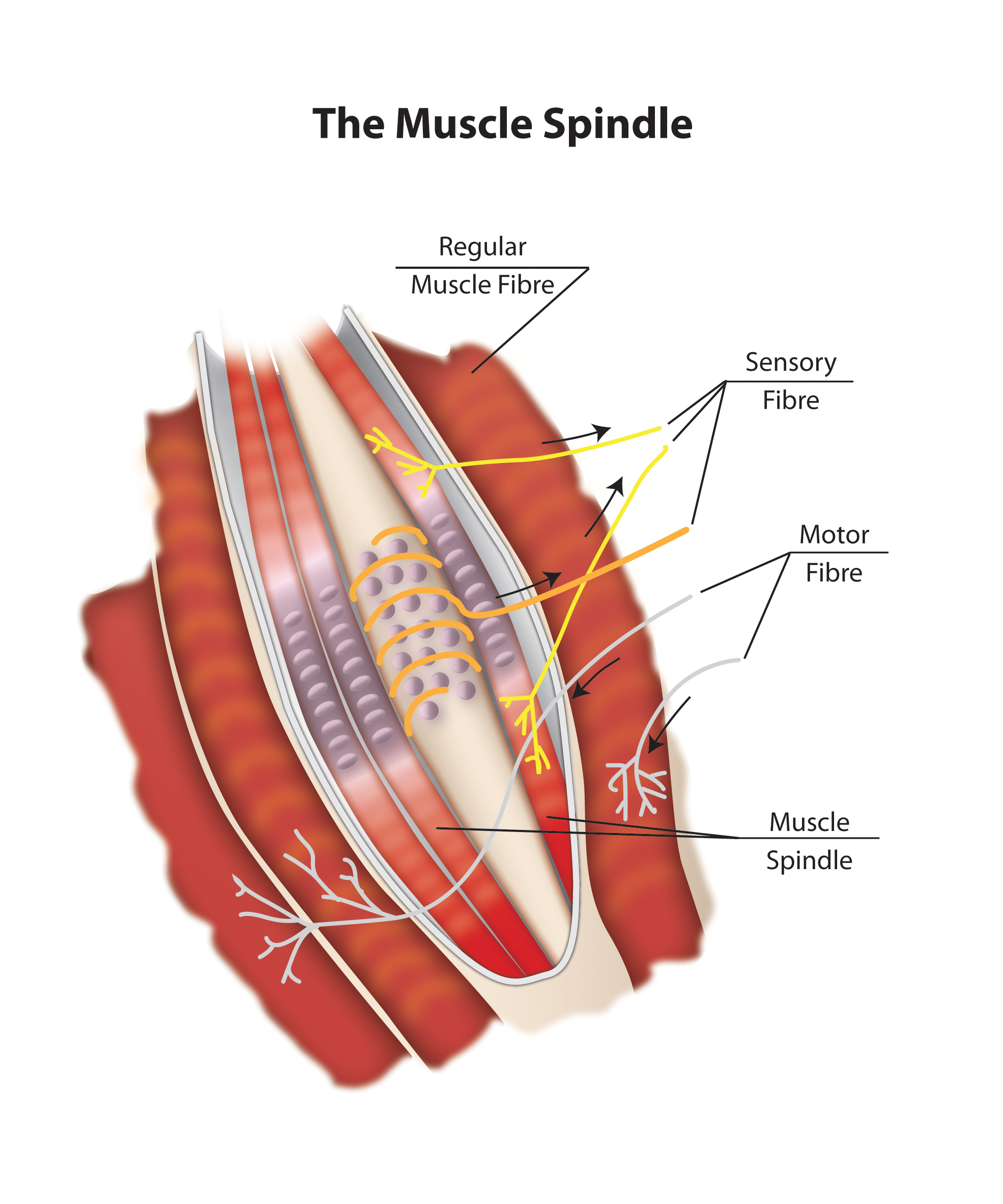
The Inhibition Interruption: When Whispers Become Silence
But muscle inhibition throws a wrench in this system. It's like dimming the lights on those muscle spindle whispers, leaving the central nervous system starved of critical data. The consequences are far-reaching:
Vulnerability to injury: Without proper reflex response, external forces easily overwhelm muscles, leading to sprains, strains, and chronic pain.
Movement deficits: With incomplete afferent information, the body compensates with awkward patterns, further perpetuating the cycle of dysfunction.
Slowed recovery: Healing requires precise coordination, and inhibition disrupts this delicate dance, hindering progress and frustrating both patients and practitioners.
Your Key to Unlocking Potential: Unveiling Inhibition Through Muscle Testing
Muscle testing isn't just about measuring strength; it's a window into the world of afferent input. By analyzing a muscle's response to your gentle resistance, you can discern:
Normal myotatic integrity: The muscle maintains or even increases its contraction, a testament to healthy spindle communication.
Inhibition: The muscle loses its power over seconds, revealing a disconnect between the spindles and the central nervous system.
Hypertonicity: The common consequence in the antagonists of inhibited muscles.
This newfound knowledge is your power play. Armed with the understanding of inhibition, you can:
Target your treatment: Design protocols that specifically address inhibited muscles, stimulating spindles and restoring communication pathways.
Optimize recovery: By removing the silent saboteurs, you create an environment conducive to healing, allowing muscles to work in harmony and patients to regain their strength and freedom.
Unlock potential: Beyond pain relief, you empower your patients to move with confidence, knowing their bodies are receiving the information they need to adapt and protect themselves.
The Central Symphony: A Practice Transformed
By mastering the intricacies of muscle inhibition, your practice becomes a stage for transformation. No longer just treating symptoms, you become a conductor, harmonizing the silent orchestra of muscles and unlocking the true potential of every patient. Embrace the whispers of inhibition, and witness the beautiful music of healing and empowered movement unfold.
Share your own experiences with muscle inhibition! How do you incorporate its assessment and treatment into your practice? Together, let's become a chorus of knowledge, unlocking the secrets of the body and guiding our patients towards a symphony of pain-free, powerful movement.
Learn more about muscle spindles here: